Address
304 North Cardinal
St. Dorchester Center, MA 02124
Work Hours
Monday to Friday: 7AM - 7PM
Weekend: 10AM - 5PM
Address
304 North Cardinal
St. Dorchester Center, MA 02124
Work Hours
Monday to Friday: 7AM - 7PM
Weekend: 10AM - 5PM
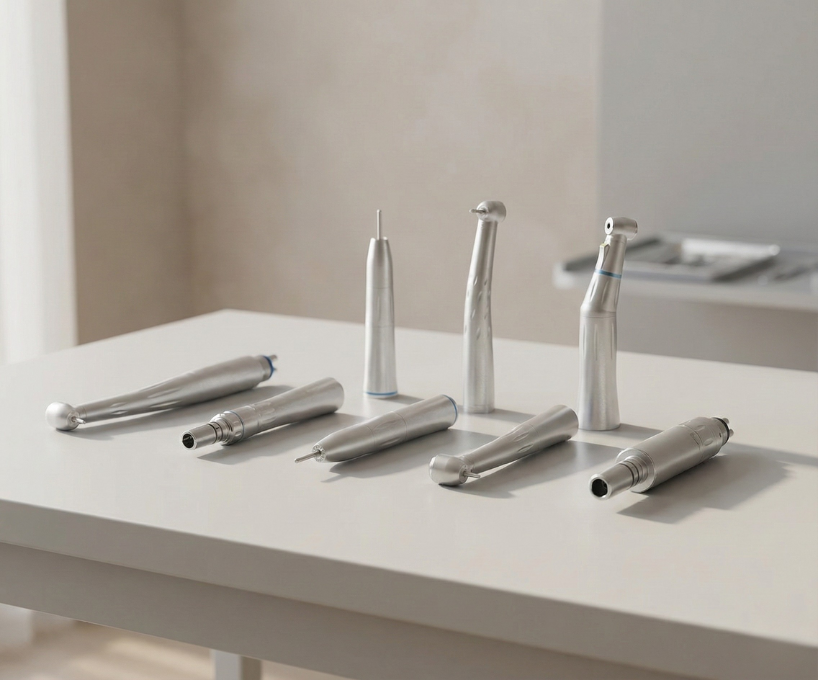
Choosing the right dental handpiece is much more than a product decision — it’s about shaping your daily clinical experience. The right tool enhances comfort, accuracy, and speed, while the wrong one can slow you down, increase fatigue, or compromise patient comfort.
As a dental professional, your handpiece is an extension of your hands — a reflection of both skill and precision. Let’s explore how to choose the most suitable handpiece for your specific clinical needs.
Not all handpieces are built for the same purpose. Understanding the distinctions helps you select the right instrument for each procedure.
The high speed dental handpiece is your go-to tool for cutting enamel, shaping teeth, and removing old restorations. It operates at around 250,000–400,000 RPM, making it ideal for fast, precise work. Modern high-speed models often feature:
Used primarily for finishing, polishing, and caries removal, the low speed dental handpiece runs at a much gentler pace (usually 5,000–40,000 RPM). Its slower torque offers more control — perfect for hygiene procedures, contouring, and lab work.
Contra-angle handpieces are designed for better access and maneuverability inside the mouth, while straight handpieces work well for extraoral procedures, trimming, or lab tasks. Together, they make up the essential duo for general dental practice.
For implantology and oral surgeries, surgical handpieces are specifically designed to maintain power at lower speeds with high torque. They also feature reliable irrigation systems to prevent overheating during prolonged procedures.
These are optimized for root canal treatments, providing torque control and variable speed options. Many models include built-in torque limiters and angle adjustments for safe, efficient canal preparation.
When evaluating your next handpiece purchase, consider both clinical performance and practical usability. Here’s what matters most:
Different treatments demand different torque and speed combinations.
A well-balanced, lightweight handpiece reduces hand fatigue during long procedures. Look for a contour that fits naturally in your grip and allows free wrist movement. Comfort directly influences both precision and efficiency.
Bearings are the heart of your handpiece. Ceramic bearings tend to last longer and run smoother than steel ones. A durable bearing system means fewer breakdowns and consistent rotation speeds over time.
Overheating can cause discomfort to patients and damage dental tissues. A reliable multi-spray system ensures effective cooling at the cutting site. This becomes even more important in high-speed applications.
Before selecting a model, confirm that the coupling or connection type matches your dental unit. Many clinics prefer universal couplings that allow quick interchangeability across units.
Modern handpieces are designed for easy maintenance and autoclaving. Choose ones that can withstand regular sterilization without affecting performance. Look for models with convenient lubrication systems and easy part replacements.
Even experienced practitioners sometimes overlook key details when buying dental handpieces. Avoid these common pitfalls:
Here are a few practical considerations that can help narrow your choices:
When in doubt, consult with a dental equipment supplier who understands your workflow and can recommend options suited to your clinic’s volume, patient types, and specialty focus.
Your dental handpiece isn’t just another instrument — it’s a daily partner in every treatment you perform. Choosing wisely ensures smoother procedures, better ergonomics, and lasting reliability.
By understanding the types, features, and selection criteria, you can invest in dental handpieces that support your precision, efficiency, and confidence for years to come.
A knowledgeable dental equipment supplier can help you explore options tailored to your clinical requirements. With the right choices today, you’ll ensure comfort and consistency in every case tomorrow.